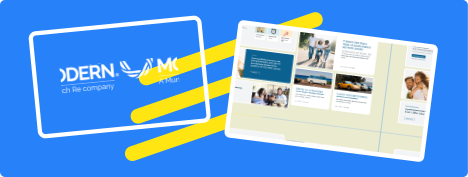

American Modern
Role
Lead Product Designer
Team
- 1 Lead Product Manager
- 1 Lead Product Designer
- 2 Engineering Leads
Platforms
- Web App
- Responsive Web
American Modern Insurance Group (AMIG) specializes in niche insurance products — from boats and collector cars to mobile homes and pets. As a B2B-focused company, AMIG relies heavily on agents to sell policies and provide servicing. While this model supported business growth, it created friction for policyholders, who found themselves overly dependent on agents for even basic tasks.
Problem Statement
AMIG's policyholders were capable, digitally-savvy adults being treated like they needed a middleman for everything. How might we give them the self-service tools they were already asking for — reducing agent dependency without undermining the relationships agents had built?
Impact
1.7Million
Policyholders
1.9billion
Premium Volume
Background
American Modern is a leading specialty insurance provider operating in a B2B model.

American Modern


Network of Agents

Policyholders
They offer niche insurance products such as:

Boat Insurance
Mobile home insurance
Collector Car Insurance
Pet Insurance
Because AMIG operates through agents. Agents serve as the primary information channel and Policyholders rely heavily on agents for servicing.

Existing Painpoints
Because AMIG operates through agents, agents serve as the primary information channel and therefore policyholders rely heavily on agents for servicing.
This model can lead to serious friction.
What We Heard From Policyholders
“Everything requires an Agent.
I wish I could manage my policies myself.”
“My policies are difficult to understand.”
“My claim is taking forever to be paid out. What is the hold up?”
The Result:

High call volumes to Customer Support teams
Confusion driven by legacy terminology and regulatory language
Frustration around transparency
Policyholders appreciated agent expertise—but were craving autonomy.
Program Objective
Alleviate CSR call volume by providing Policyholders with the answers and empower them to self-service.
Project Objective
Deliver Digital Storefront & Shopfloor experiences for Policyholders.

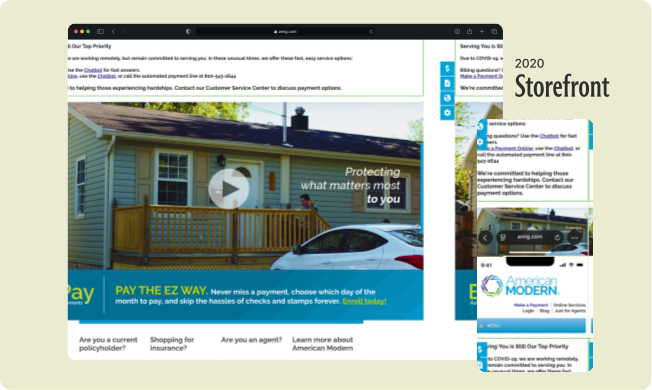
Digital Storefront
Policyholder's first impressions of American Modern. How they enter the experience and start to “browse” pre-login.
Marketing-Oriented
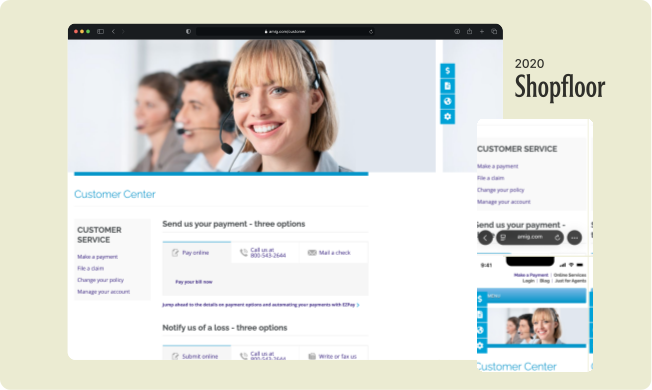
Digital Shopfloor
To allow American Modern customers to meaningfully engage with their policies (access documents, make payments, file claims)
Service-OrientedApproach
Immerse ourselves in AMIG's wealth of research
We leveraged AMIG's existing research and translated findings into realized insights via:
Data-driven personas
User journeys
Jobs-to-be-done
Epics and prioritized features
This ensured our designs were grounded in real customer needs—not assumptions.
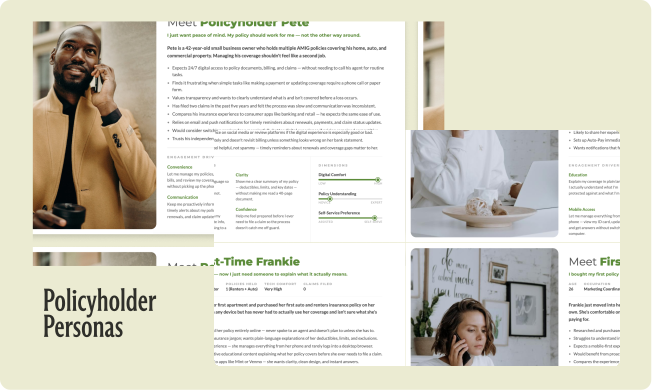
Ideate & Play
We explored a wide solution space — stress-testing ideas against real user needs before committing to direction. Outputs included persona refinements, journey mapping, and prioritized feature sets.
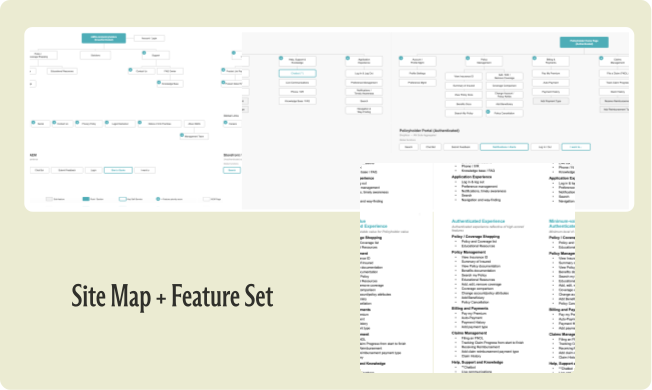
Definition & Hand-Off
Pushing our explorations into tangible high fidelity designs.
UI Templates
Documented Figma Design Library
End-to-end interactive prototypes
Design-ready assets for engineerings
Digital Storefront
We redesigned the entry experience to create stronger brand engagement before login, clarify product categories, and make specialty insurance approachable without the jargon.
This reframed American Modern from “agent-dependent insurer” to “accessible specialty provider.”
Digital Shopfloor
A structured self-service dashboard where policyholders can view all active policies, access documents, track claims, manage payments, and understand coverage — without agent mediation.
Information architecture was simplified to reduce cognitive load and eliminate industry-heavy terminology wherever possible.


Outcomes
KPMG's scope was design and delivery; implementation was handled by AMIG's internal teams. The redesigned client portal is live today.
Improved digital clarity across all policy types
Expanded self-service capabilities
Reduced reliance on CSR call centers
A scalable UI framework for future product lines